Leaves
|
|||||||||||||||||
 |
 |
||||||||||||||||
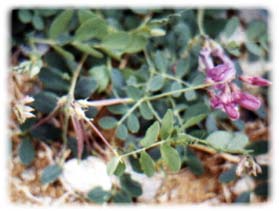
Pamutunguak is a beautiful summer sight with the silvery-green leaves and purple flowers. Reaching only 6-8 inches at it's tallest, this plant makes a nice table decoration. It has a thick, fleshy root from which several stems grow.
The leaves of pamutunguak are eaten mixed with other green as a salad with seal oil. The other greens include pink plume or kaghapchuk, beach greens or achaaqluk, and roseroot or iviqluk. The spring time is the best time to collect these greens, because later in the summer they become tough and bitter. "Bony" was the term that the villagers used to describe older plants.
My Aunt Kathy Punguk told me that on St. Lawrence Island, where she is from, they would collect this dwarf fireweed, named ungughuk in her Siberian Yupik Eskimo dialect, and age the greens in barrels with water covering them. The greens were weighted down by rocks to keep them submerged in the water. The barrels would sit all summer and the greens were eaten in the winter with sugar and seal or wesson oil, when greens were hard to come by. In the summer when the greens were fresh, they dunked them in aged seal, whale, or walrus blubber. Fermented seal oil on the other hand is made by heating the blubber until all the fat melts, then it is aged. The length of time the oil or blubber is aged varies, but the average time would be for the summer. After the oil is aged it is usually stored in the freezer.