


 This collection of student work is from Frank Keim's classes. He wants to share these works for others to use as an example of culturally-based curriculum and documentation. These documents have been OCR-scanned and are available for educational use only.
Special | A | B | C | D | E | F | G | H | I | J | K | L | M | N | O
P | Q | R | S | T | U | V | W | X | Y | Z | ALL
Aldine Simon:
Aldine Simon I have only two sisters, Cleo Johnson and Alice Napoleon. Pete
Kopanuk is my only brother still alive. My oldest brother is
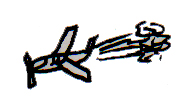
deceased. I was in school but I did not attend much because I always had to go to fish camp. The old days were a lot of fun. We were poor and we used to try to get money by selling seal skins. We often had no ammunition and sometimes even had to make it out of stones. We never used to see any planes at all. The first planethat came to Hooper Bay was in 1929. The village was located by the river then and the rest of the place was a grave yard. I first saw the plane coming from the mountains. People were really scared when they saw it coming. It landed in front of the village.
 interview
by Eleanor Tomaganuk interview
by Eleanor Tomaganuk | ||
|


 I
got married in 1926 to Mike Simon. We lived in mud houses and heated
the inside with wood. Our windows were made with ice in winter. But
when the weather was calm we used seal gut for a window. We had many
different types of native food. We used to travel by dog team in the
winter time, and we melted ice for water. We used to go to fall camp
at Kaunuqinaq and Old Chevak, and we traveled there by skin boats
with other people. There used to be a lot of people at Hooper Bay.
They had two large mud qaygiqs where the men used to eat and work.
The women took them their food there. In the qaygiqs they also held
Eskimo dances. They used to wear bird skin parkas and kuspaks. And
they wore piluguks instead of shoes. They used seal oil lamps to
light their houses with. And they used to put snow along the porches
for wind protection.
I
got married in 1926 to Mike Simon. We lived in mud houses and heated
the inside with wood. Our windows were made with ice in winter. But
when the weather was calm we used seal gut for a window. We had many
different types of native food. We used to travel by dog team in the
winter time, and we melted ice for water. We used to go to fall camp
at Kaunuqinaq and Old Chevak, and we traveled there by skin boats
with other people. There used to be a lot of people at Hooper Bay.
They had two large mud qaygiqs where the men used to eat and work.
The women took them their food there. In the qaygiqs they also held
Eskimo dances. They used to wear bird skin parkas and kuspaks. And
they wore piluguks instead of shoes. They used seal oil lamps to
light their houses with. And they used to put snow along the porches
for wind protection.